
Conflict is an Olympic Sport: Building the Muscle for Relationship Resilience
When we think about what makes a relationship “good,” we often default to words like compatibility or communication. We look for partners who share our hobbies, who like the same restaurants, or who can finish our sentences. We assume that if we just learn the right “I feel” statements, the fights will stop, and the smooth sailing will begin.
But if compatibility were the only requirement, we wouldn't see so many couples who look perfect on paper struggling behind closed doors. And if communication scripts were the cure-all, every couple who has read a self-help book would be living in perpetual harmony.
The truth is, lasting love requires something much grittier than compatibility. It requires the ability to stay present when your nervous system is screaming at you to run away. It requires resilience—the kind of muscle memory that allows you to navigate the icy, slippery terrain of conflict without crashing.
The Olympic Mindset: Staying Present in the Heat of the Moment
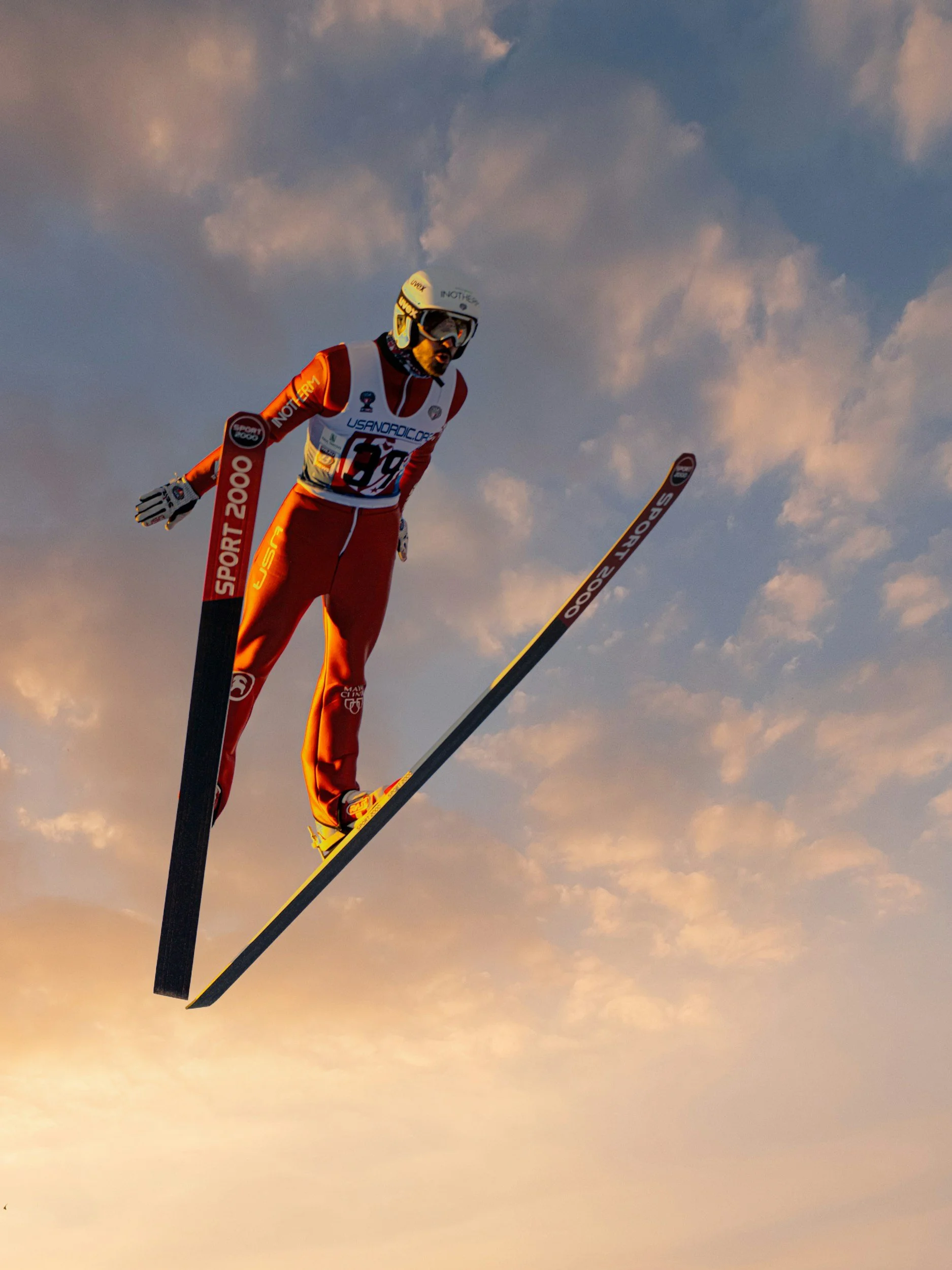
Think about the 2026 Winter Olympics in Milano Cortina. When a skier like Mac Forehand drops into a slopestyle course, he isn't hoping for a ride without gravity or friction. He knows the resistance is part of the sport. His goal isn't to avoid the jumps; it's to land them.
When he is mid-air, spinning, the stakes are incredibly high. If he panics or stiffens up, he crashes. His success depends on his ability to stay loose, present, and responsive to the changing environment, even when the pressure is immense.
Relationships operate on a similar principle. You cannot avoid the “jumps” (the disagreements, the hurt feelings, the misunderstandings). They are baked into the landscape of intimacy. The difference between a couple that crashes and one that lands safely isn't the absence of conflict; it's the ability to stay present in the heat of the moment.
It’s easy to be a great partner when you’re relaxing on a Sunday morning with coffee. It is infinitely harder to be a great partner when you are triggered, your heart rate is over 100 beats per minute, and every instinct in your body is telling you to defend yourself or shut down.
Staying in the Room
One of the hardest things to do in a relationship is to simply “stay in the room” when your partner is in pain, especially if they are telling you that you are the cause of that pain.
Our immediate reflex is usually explanation or defense.
“I didn’t mean it like that!”
“You’re misunderstanding me.”
“Well, you did X, so I did Y.”
While these responses feel natural, they are actually a form of fleeing the scene. By jumping immediately to defense, we are effectively saying, “I cannot tolerate your pain right now, so I need to explain it away.”
True resilience is the capacity to pause that reflex. It’s the ability to look at your partner, hear their hurt, and let it land without immediately trying to deflect it. This doesn't mean you agree with their interpretation of events. It means you are strong enough to witness their experience without crumbling or counter-attacking.
Taking Responsibility for the Shut-Down
Just as an athlete must know their own body’s limits, we must know our own emotional limits.
In high-stress moments, many of us “check out.” You might physically stay in the room, but emotionally, the shutters have come down. You’re staring at your partner, but you’re no longer listening; you’re waiting for them to stop talking so you can leave or retort.
This is a biological protection mechanism. When we feel threatened (even by a partner's criticism), our bodies can go into a freeze state.
The work here isn't to never shut down, that’s an impossible standard. The work is to notice when it’s happening and take responsibility for it. It looks like saying:
“I want to hear you, but I can feel myself shutting down right now. I’m overwhelmed. Can we take a 20-minute break so I can come back and actually listen?”
This is a move of tremendous strength. It transforms a moment of disconnection into a moment of responsible boundary-setting.
Concept vs. Practice: Why Tools Fail
We all know what we should do. We know we should listen. We know we shouldn't yell. We know we should validate. So why does all that knowledge fly out the window at 8:00 PM on a Tuesday when the dishes aren't done?
Because understanding a concept is different from practicing it under pressure.
You can watch videos of curling all day long. You can understand the physics of the stone and the strategy of the sweepers. But until you are actually on the ice, balancing on a slippery surface while trying to execute a precise movement, that theoretical knowledge is just theory.
Many couples feel shame because they "know better" but can't seem to "do better." But you cannot think your way out of a nervous system reaction. You have to train for it. You have to practice the pause when the stakes are low so that you can access it when the stakes are high.
Building the Muscle: Navigating Hard Stuff Without Destruction
We often operate under the false belief that a “successful” couple is one that avoids the hard stuff. We think if we just tiptoe around the sensitive topics, we’ll be safe.
But avoidance is not safety; it’s fragility. If you avoid the hard stuff, you never build the muscle to carry it.
Capacity building is the process of gradually increasing your tolerance for discomfort. It’s allowing a conflict to be messy without declaring the relationship over. It’s allowing yourself to be wrong without spiraling into shame. It’s allowing your partner to be angry without assuming they hate you.
Every time you navigate a rupture and find your way back to repair, you are building that muscle. You are proving to yourselves that your relationship is strong enough to hold big, scary emotions and survive.
The Secret to Relationships That Last
The secret isn't finding someone with whom you never fight. The secret is finding someone with whom you are willing to get in the ring and do the work.
It’s about looking at the icy slope of conflict and deciding to drop in together, knowing you might wobble, you might slip, but you have the skills and the resilience to help each other back up.
The goal isn't a life without friction. The goal is a love that is stronger than the friction it encounters.
Looking for more personalized guidance? If you’re ready to strengthen your relationship resilience and build lasting connections, I invite you to learn more about my therapy services at Bethany Argenio Therapy. I specialize in helping individuals and couples navigate conflict, repair disconnection, and foster healthier, more resilient relationships. Explore my offerings, schedule an appointment, or contact me today to start your journey toward lasting, meaningful change.
